Introduction
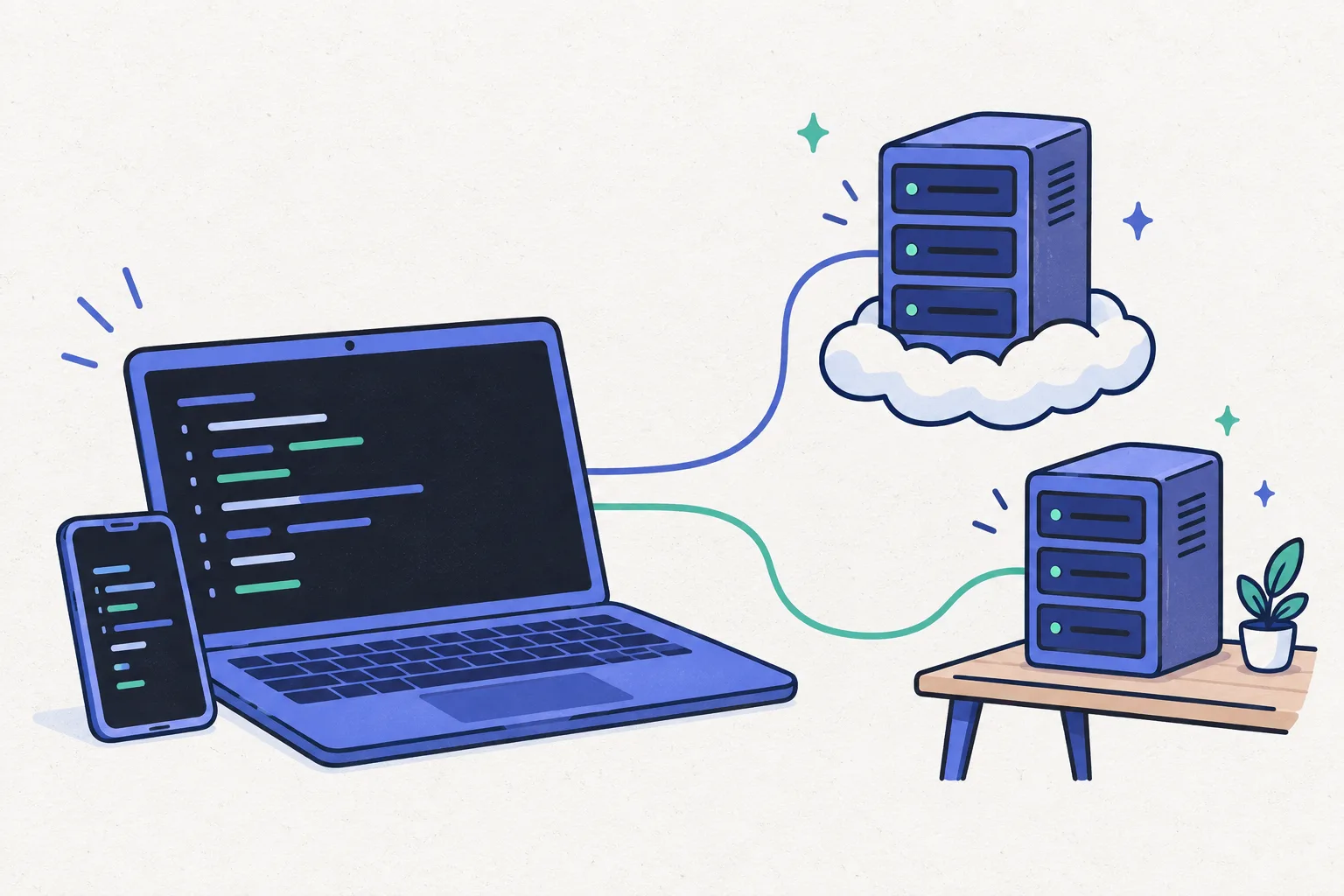
ClawTab's Machines panel brings Linux hosts into the same workflow as your Mac. Select a computer, open its terminal, start an agent, or manage a repository. The latest changes make that selection easier to read, with a This Mac label, online status, and visible indicators for the active machine and tab.
We are also building rented remote boxes: Hetzner servers prepared by ClawTab and attached to your account after purchase. They will use the same machine controls. As of September 9, 2026, rentals are under implementation and purchases remain disabled pending configuration and end-to-end validation. This is a preview of that part of the work.
The connection to our earlier Linux setup guide is direct: a server you pair yourself and a server prepared for you both run the agent where its repository lives. Opening it from another device changes the view and controls, not the location of the process.
A clearer answer to which machine is selected
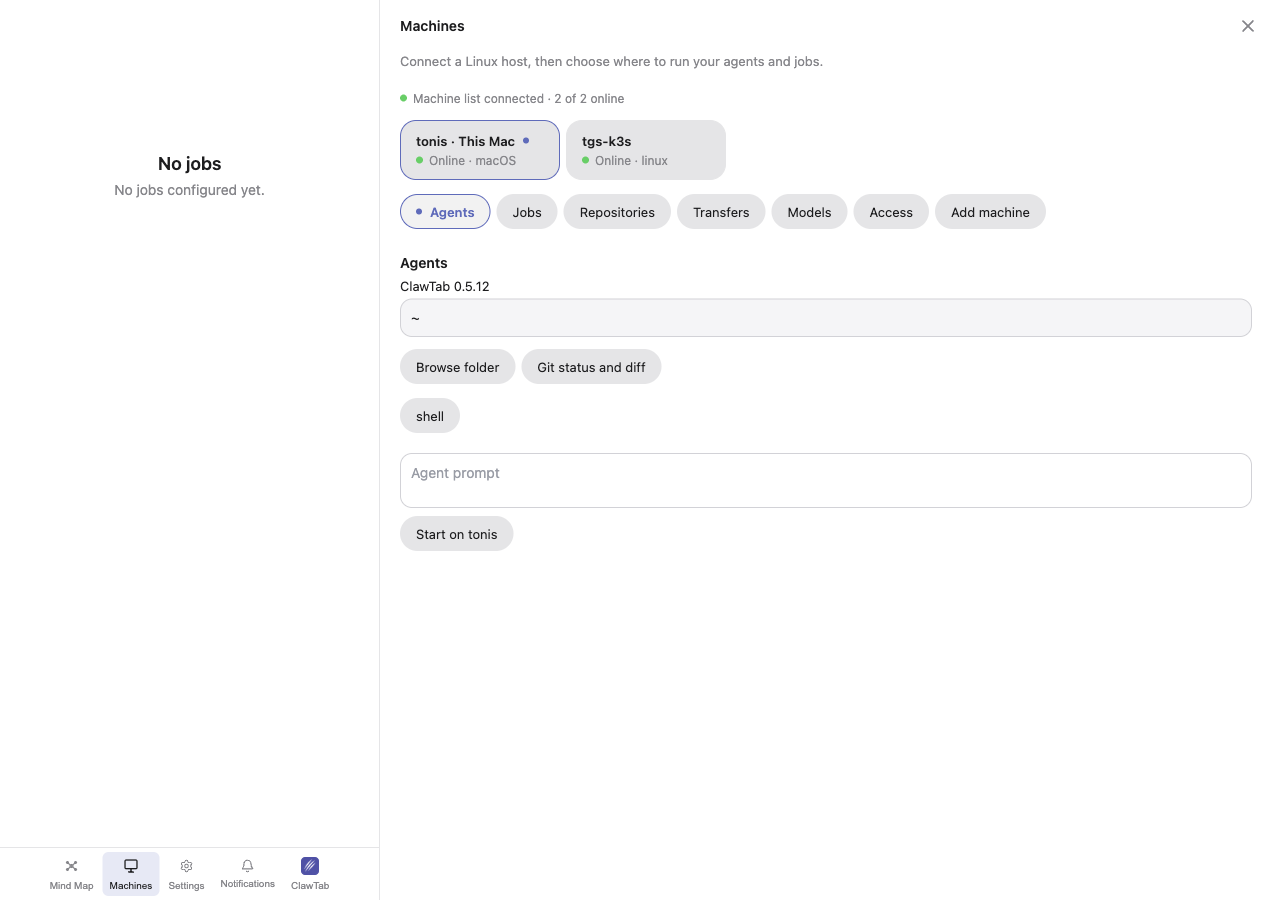
The desktop now has one machine selector in its dedicated Machines panel. Your local computer is labeled This Mac. Cards show the platform and an Online or Offline label beside a status dot. An online count describes the roster; a separate indicator marks the host you selected.
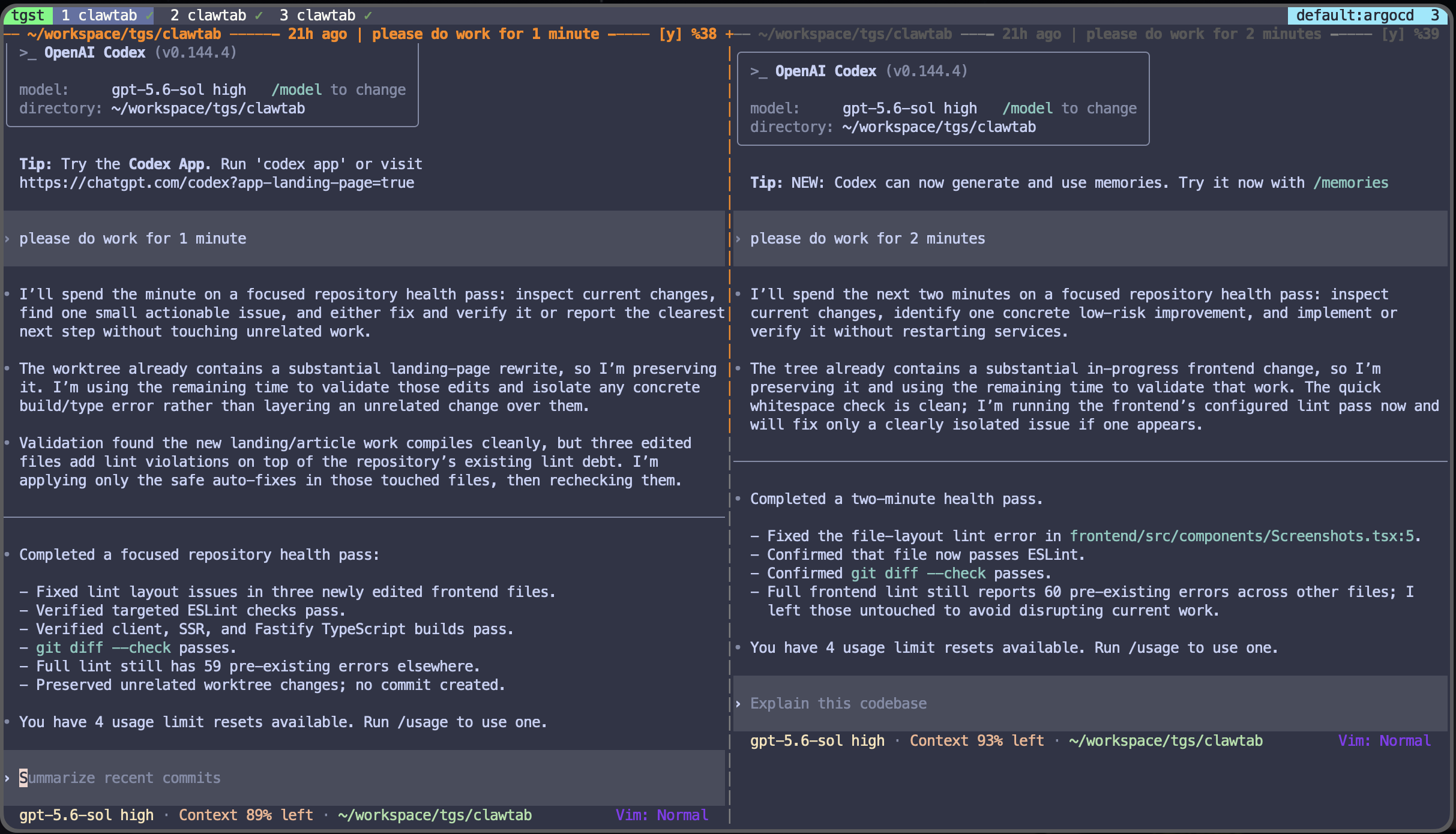
The screenshot shows a Mac and a Linux host together. The selected Mac and Agents tab have visible indicators, and the launch button names its target. That matters when two computers have the same repository path or tmux pane number. Rounded controls also bring the panel closer to the rest of the desktop app.
Pair a host, then work on it
A Linux machine runs one ClawTab daemon. It connects outbound to the shared relay and manages schedules, agent discovery, questions, and local CLI requests. You do not need a relay or database on each host.
Install a Linux release package, run cwtctl setup on the host, and approve its temporary code in Machines → Add machine. Then select that host explicitly. The same panel gives you several ways to work:
| Control | What it does on the selected host |
|---|---|
| Agents | Browse a directory and launch a shell or an enabled agent model. |
| Jobs | Create scheduled work; manage existing jobs on their owning machine. |
| Repositories | Clone, inspect Git changes, or create a branch in a new worktree. |
| Transfers on desktop | Send or retrieve a repository snapshot for review in a separate worktree. |
| Models and Access | Choose host model identifiers and explicitly grant access to workspace guests. |
Install and authorize your coding tools on the host where they will run. Enabling a model in ClawTab does not install its CLI or copy a login from your laptop. The remote machine setup docs cover both systemd and Kubernetes.
Connection errors now point to the right setup step
There are two useful connection states. The daemon's credential connects this computer to the relay. Your account session lets the app load the machine list, approve pairing, and manage access. These come from the existing ClawTab sign-in; Machines does not introduce another account.
If the account session expires, the daemon may still say Connected while the machine list cannot load. The panel now exposes the error and offers Retry connection and Open account settings. Sign in under Settings → Remote → Account access, then retry. Empty tabs also explain whether you need to connect, pair a host, or select one.
Repeated registrations can leave several entries with the same machine name. Names are not unique identities. The updated Remove Relay Configuration flow removes the server registration before clearing local settings, and preserves local pairing if removal fails.
Next: a prepared box in the same machine list
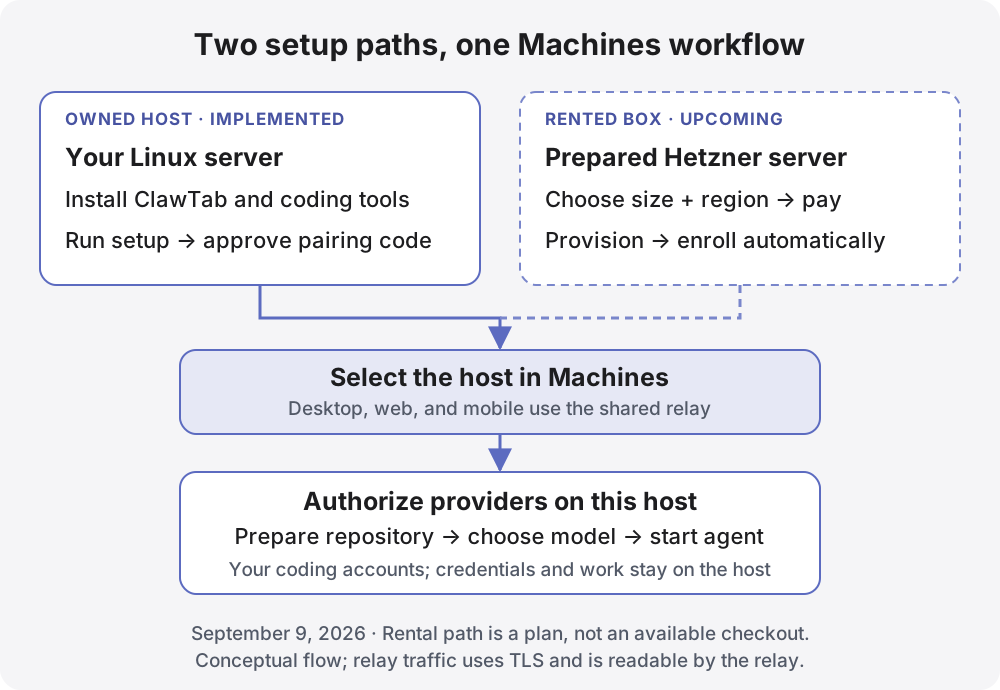
The rental work adds another way to obtain a host. The planned desktop and web flow is Rent a box → choose a size and region → pay → wait for setup → open terminal. Enrollment should attach the prepared machine to the purchaser's account automatically, without a pairing code. iOS is planned to access existing rentals; purchasing is planned for desktop and web.
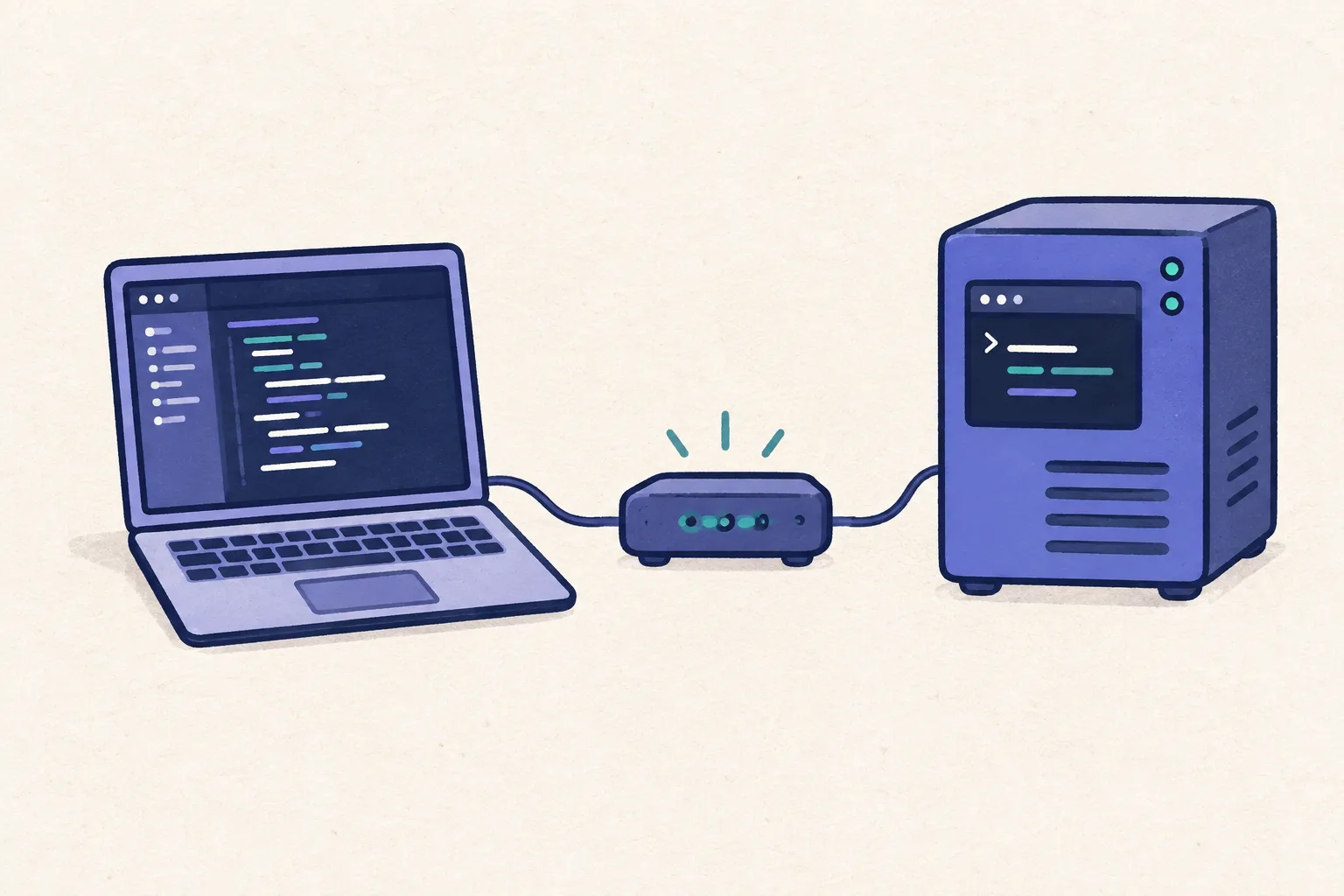
The diagram shows where the two setup paths meet. An owned host needs installation and pairing. A rented host is intended to arrive with ClawTab, tmux, Git, Python, Node, Claude Code, Codex, and OpenCode installed. In both cases, you authorize your own coding accounts on the host and use the same machine controls.
What the rental preview includes
The first version targets shared-CPU x86 servers with 4 GB or 8 GB RAM. The catalog will show the actual CPU, disk, included traffic, region, and monthly total before payment. A nearby region can be suggested, but the customer chooses it. We are not publishing fixed server prices before the live catalog is ready.
| Detail | Planned rental behavior |
|---|---|
| Eligibility and payment | A paid ClawTab subscription, plus a separate monthly subscription per box, paid in advance. |
| Price | Provider cost including mandatory charges, multiplied by 1.20. Applicable taxes appear before payment. |
| AI usage | Your own coding-tool subscription or API credentials; no bundled AI usage. |
| Administration | A Linux user with sudo and optional SSH public keys. |
| Missed renewal | A ten-day recovery window from the unpaid renewal's due time, followed by permanent deletion. |
| Cancellation | Stop renewal and delete at the paid period's end; immediate deletion requires separate confirmation. |
| Backups | Customer responsibility. Managed backups and resizing are outside the first version. |
Deletion has to be explicit because powering off a VPS does not end provider billing. Hetzner's billing documentation says servers are billed while they exist, including when stopped, and retained Primary IPv4 addresses are billed separately. The planned rental lifecycle therefore removes associated billable resources as well as the server.
Keep a copy of work you need to retain outside the box. The rental preview docs explain authorization, cancellation, payment recovery, and the limits of the planned first version.
The host keeps the work
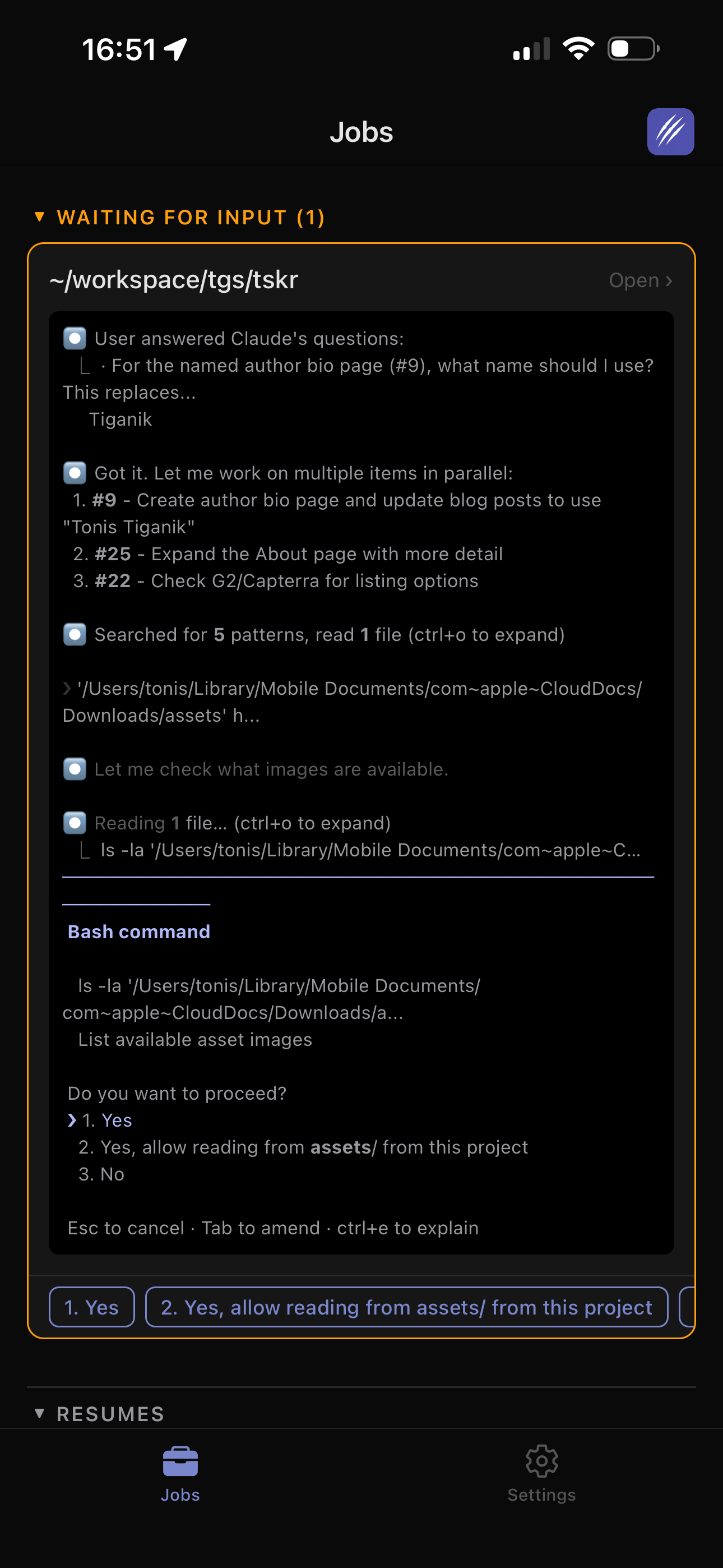
Closing desktop or mobile leaves the remote process running. Multiple clients can observe its terminal, while one relay client holds input control; Take control transfers it. A disconnected machine produces an error, so a launch is not silently sent to another host.
Transfers copy repository state into a new worktree. They do not move a running conversation or continuously synchronize files. On a systemd host, restarting the daemon leaves separate tmux sessions alive. Rebooting the host or replacing a container ends its running agents. A Kubernetes persistent volume retains files across pod replacement, as described in the StatefulSet documentation; it does not preserve processes.
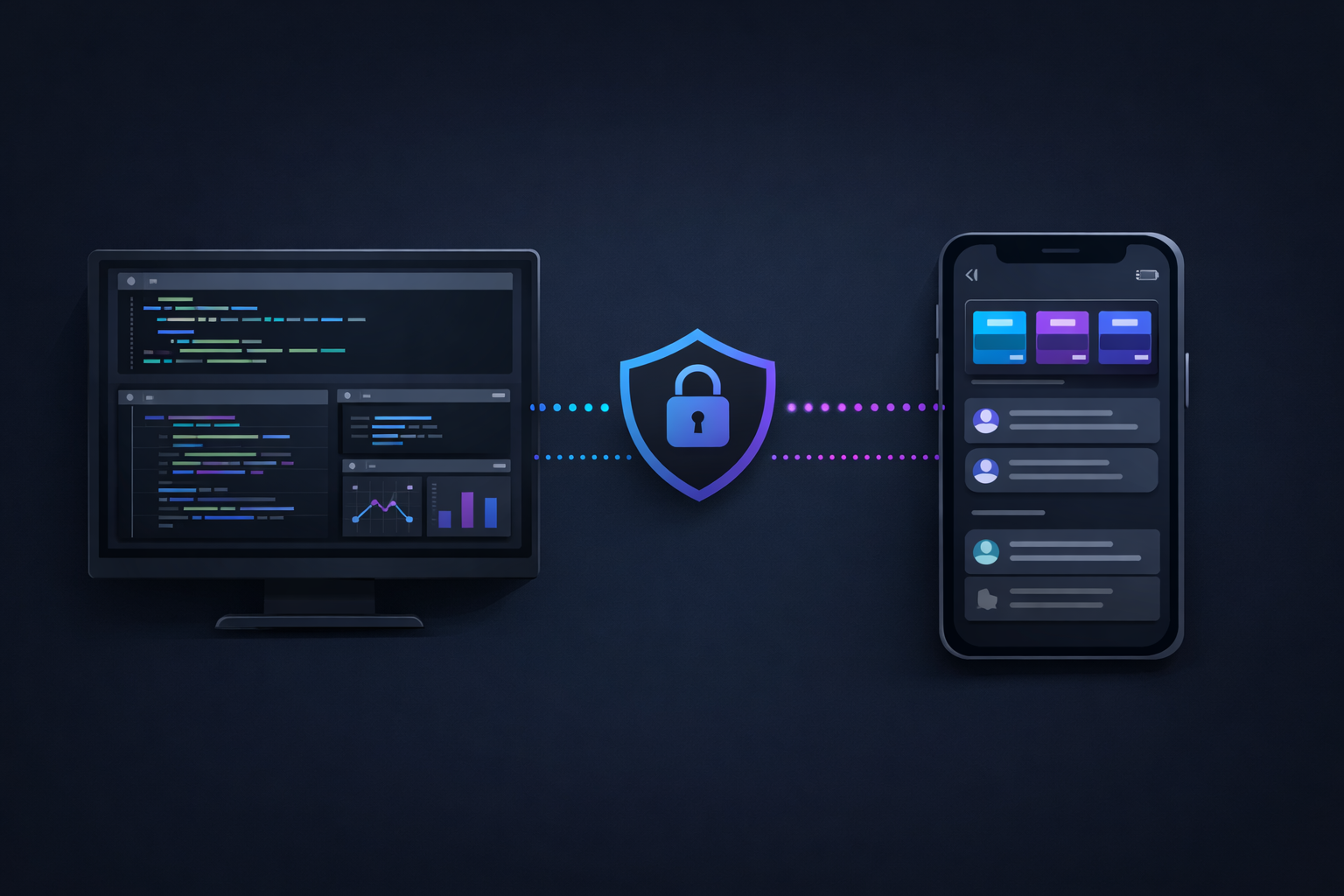
Connections use TLS under ClawTab's existing relay trust model. The relay can read terminal and transfer payloads. For setup, start with Linux machines; for the underlying process model, see ClawTab's daemon and tmux control plane.